How To Review A Peptide Purity Test: Hplc, Mass Spectrometry And Coa Interpretation For Uk Researchers 2026
Recognizing Peptide Purity: What 99%+ Really Suggests

It is an area-percent purity measurement, not a complete identification or activity test. Notably, pureness portions explain chemical make-up only-- they do not suggest sterility or Peptide Science biological suitability. Peptides from Maxed Out Compounds are supplied exclusively for research laboratory research usage and are not meant for human or veterinary objectives. Peptide purity is usually expressed as a percentage, such as 95% or 98%. This figure represents how much of the example is made up of the desired peptide series. For most lab applications, a purity of 95% or greater is thought about research-grade.
- Beginning with proper laboratory validation is as a result a crucial part of a researcher's quality control workflow.
- " Mass spectrometry solutions "is the detected compound regular with the designated peptide identification?
- The outright quantity of the correct peptide in an example is the product of the peptide web content and the peptide pureness.
- If series confirmation is essential for your research study, this is the evaluation to request.
- As an example, capillary electrophoresis can be used to separate very hydrophilic peptides or to ascertain results, and MALDI-TOF mass spectrometry can aid in mapping bigger or customized peptides.
Example Prep Work
By demanding peptides that come with verification of pureness and identification, scientists can considerably minimize the danger of speculative artifacts. Conversely, utilizing peptides that have actually passed third-party laboratory recognition helps ensure that the observed speculative impacts are truly due to the intended peptide and not due to pollutants or errors. When you see peptides advertised as "research-grade," it describes their meant usage and the level of producing oversight. Research-grade peptides are made for lab research usage only-- they are not produced under pharmaceutical GMP standards and are not indicated for usage as therapies or in humans. These peptides include a standard quality control bundle, typically consisting of HPLC pureness evaluation and MS verification of identification, ensuring they satisfy clinical criteria for pureness and composition.
Other strategies like electrophoresis, capillary electrophoresis (CE), and nuclear magnetic resonance (NMR) can likewise be made use of to examine peptide framework, fee, and pureness, guaranteeing extensive characterization. In COA review, it typically includes HPLC pureness screening, mass spectrometry identification confirmation, and batch-specific paperwork showing the checked whole lot, technique, results, and date. For peptide pureness testing, reverse-phase HPLC is the typical theoretical design. The chromatographic pureness is then calculated by contrasting the location under the main optimal with the total location under all incorporated optimals.Pinnacle Laboratory is a customized supplier of high-purity chemical reagents and peptides. All products provided are strictly for in-vitro laboratory r & d make use of just. Discover flagship study peptides with batch-specific COA documents and HPLC/MS verification. Products are for in-vitro laboratory research study use just and are except human consumption.
Extensive Peptide Quality Testing Services
We utilize GC-MS, ICP-MS, and various other techniques to detect impurities, making sure item safety and regulative compliance. Peptide sequencing is vital for determining the specific amino acid sequence of peptides, including modifications like phosphorylation or acetylation. Sequencing enables scientists to recognize the biological function of the peptide and its interaction with various other molecules, aiding in the layout of functional peptides for diverse applications. The peptide sample is dissolved in a compatible solvent and packed right into an autosampler.
This degree of comprehensive evaluation guarantees the peptide's accuracy-- suggesting the sequence and purity are specifically as classified-- which is crucial for speculative reproducibility. By validating composition through numerous verified techniques, research laboratory validation warranties that researchers receive a high-purity peptide that will certainly do as expected in the lab. Lab recognition of peptides is not only a clinical ideal method-- it's usually a regulatory demand when peptides Trusted Peptide Vendor are made use of in restorative development or scientific study.Changed Peptides
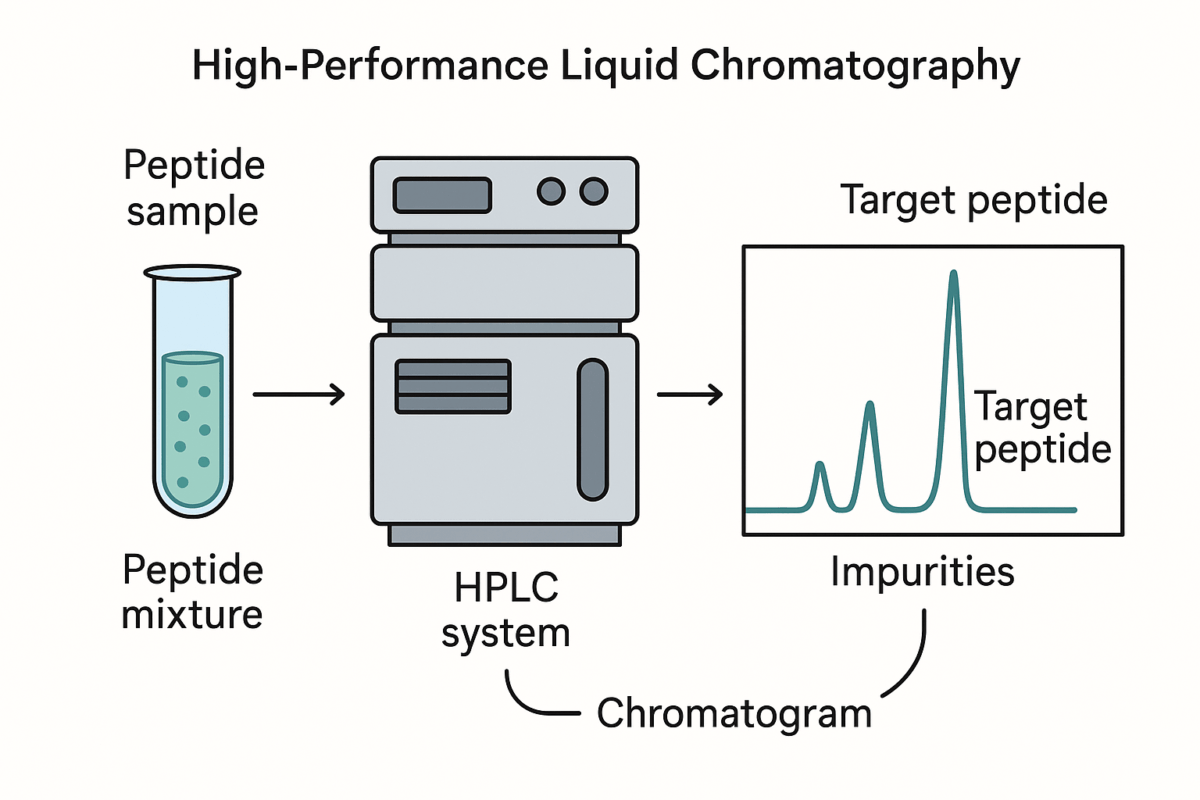
We sustain amino acid composition analysis and web peptide web content assessment for teams that need even more reliable concentration setting and set analysis. HPLC-tested suggests the sample was run through high-performance liquid chromatography to separate the target peptide from impurities. The pureness percentage is typically determined from the main peak location split by the complete integrated top location.The software attracts boundaries around each peak and computes the location beneath. The purity portion originates from comparing the area of the primary peak to the complete location of all detected optimals. Most reports include a table listing each top's retention time, area, and percentage of total area.
An example could produce a clean-looking chromatogram with one dominant height and still be the incorrect substance if identity was never ever confirmed. HPLC procedures splitting up and family member peak area; mass spectrometry measures mass-to-charge habits that can be made use of to confirm molecular identity. Peptide purity screening is the procedure of confirming that a peptide sample consists of only the intended series-- and no substantial pollutants or by-products from synthesis. Since peptides are developed via complicated chemical processes, trace pollutants can form normally. Examining permits scientists to understand specifically what's in the vial, confirming both identification and top quality. Selecting a reputable third-party laboratory is essential to getting trusted peptide validation outcomes.